Core Values of Control
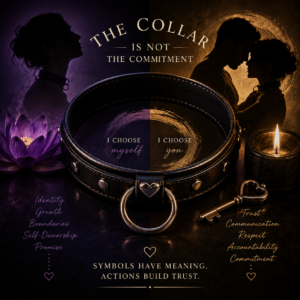
The Collar Is Not the Commitment
Self Collaring, Collaring Ceremonies, and What the Symbol Actually Means There are objects in BDSM that can carry considerably more meaning than their physical form suggests. A collar

Self Collaring, Collaring Ceremonies, and What the Symbol Actually Means There are objects in BDSM that can carry considerably more meaning than their physical form suggests. A collar
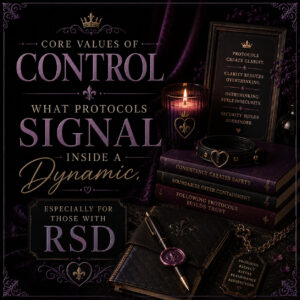
Protocols and RSD RSD, or rejection sensitive dysphoria, describes intense emotional pain connected to perceived rejection, criticism, or disapproval. Inside D/s, that can be amplified. Especially when structure
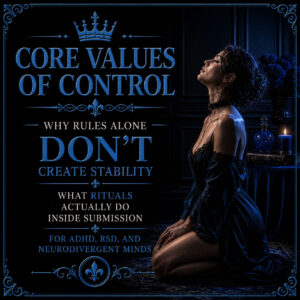
Most dynamics believe they have structure because they have rules. Clear expectations.Defined boundaries.Agreements in place. On paper, everything looks solid. But emotionally, something still feels unstable. Especially in
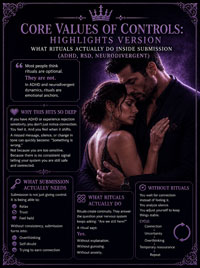
Most people think rituals are just “nice extras” in a dynamic. Something aesthetic.Something symbolic.Something optional. They are not. Especially in ADHD and neurodivergent dynamics, rituals are not decoration.
Most people use the words rules, rituals, and protocols like they mean the same thing. They do not. And when you confuse them, your dynamic suffers. Especially if
Most dynamics do not fail because of lack of desire. They fail because nothing is holding them in place. At the beginning, everything feels strong. Clear.Intentional.Aligned. There is
Within Dominance, there is a quiet expectation that control should feel natural. Consistent.Reliable.Present. But for many Doms with ADHD, that is not what it feels like internally. It