
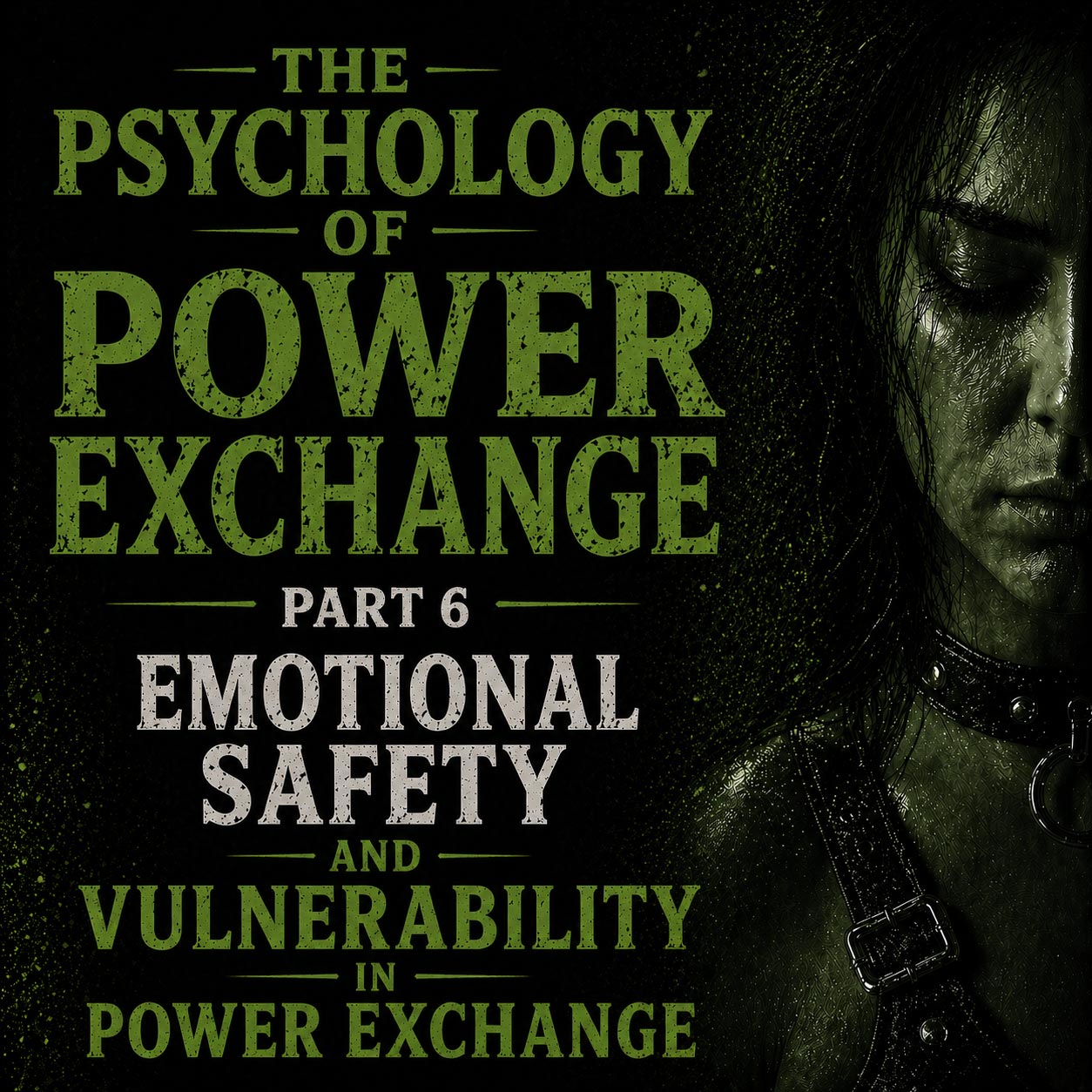
When people first learn about BDSM, most conversations focus on physical safety.
Safewords. Limits. Risk awareness. Aftercare. These topics are essential, and every responsible kinkster should understand them. But there is another layer of safety that is just as important and sometimes even more fragile.
Emotional safety.
Power exchange is not only physical. It often involves deep vulnerability, trust, and exposure. When someone chooses to lead or submit, they are often revealing parts of themselves that are rarely shared elsewhere. Because of this, emotional safety must be treated with the same seriousness as physical safety. Without it, trust cannot grow. And without trust, power exchange cannot thrive.
The Emotional Depth of Power Exchange
Dominance and submission create unique emotional experiences. A submissive may allow themselves to be vulnerable in ways they never have before. They may reveal desires, fears, and needs that require deep trust. A Dominant may carry the responsibility of guiding someone who has chosen to place that trust in their care.
Both roles involve emotional exposure. That exposure can create powerful connection, but it also requires awareness. When partners acknowledge the emotional side of power exchange, they create space for deeper trust and more meaningful experiences.
Ignoring emotional vulnerability, on the other hand, can lead to confusion or emotional harm.
Understanding this balance is essential.
Trust as the Foundation
Trust is the cornerstone of emotional safety.
A submissive must trust that their vulnerability will not be used against them.
A Dominant must trust that their partner will communicate honestly about their needs and limits.
Trust develops through consistent behavior over time.
It grows when partners keep their word.
It grows when boundaries are respected.
It grows when emotional experiences are handled with care.
Trust cannot be rushed.
It is built through small moments of reliability that accumulate into confidence.
And once it is established, it allows both partners to explore power exchange with greater depth.
Empathy in Both Roles
Empathy is one of the most valuable skills any kinkster can develop.
It allows partners to recognize emotional signals that may not be spoken directly.
A submissive might experience unexpected vulnerability after a scene.
A Dominant might feel the weight of responsibility in ways they did not anticipate.
Empathy allows partners to recognize these experiences and respond with care.
Instead of dismissing emotions, they acknowledge them.
Instead of assuming everything is fine, they check in.
Empathy strengthens connection because it shows each partner that their wellbeing truly matters.
Emotional Awareness
Emotional awareness means understanding not only your partner’s feelings but also your own.
Power exchange can create powerful emotional responses.
Excitement.
Relief.
Vulnerability.
Trust.
But it can also reveal unexpected feelings.
A submissive may discover deeper emotional needs than they anticipated.
A Dominant may feel responsibility in ways that require personal reflection.
Recognizing these emotions allows partners to navigate them thoughtfully rather than react impulsively.
Self awareness is one of the strongest tools for maintaining emotional safety within a dynamic.
Creating a Safe Emotional Environment
Healthy D/s dynamics create environments where both partners feel safe expressing their emotions.
This means allowing space for honest conversations.
It means encouraging vulnerability rather than dismissing it.
It means recognizing that emotional reactions are part of the experience rather than something to avoid.
When partners know they can speak openly without judgment, emotional safety grows naturally.
This environment allows exploration to deepen while still protecting the wellbeing of everyone involved.
Aftercare and Emotional Support
Aftercare is often discussed in terms of physical comfort, but emotional care is equally important.
After intense scenes or vulnerable experiences, partners may need reassurance and connection.
Talking about what happened.
Sharing how each person felt.
Providing comfort and grounding.
These moments reinforce trust and help partners process the emotional intensity of power exchange.
Aftercare reminds both partners that the dynamic is built on care, not just intensity.
Vulnerability as Strength
In many parts of life, vulnerability is seen as weakness.
But in healthy BDSM dynamics, vulnerability is a form of strength.
A submissive who trusts someone with their vulnerability shows courage.
A Dominant who handles that vulnerability responsibly shows integrity.
When vulnerability is respected, it becomes the foundation for deeper connection.
It allows partners to explore power exchange in ways that are not only exciting but also meaningful.
And that meaning is what makes healthy dynamics so powerful.
Coming Next
As we continue exploring the psychology of power exchange, the final piece of this module focuses on one of the most important safety skills new kinksters can develop.
Recognizing healthy partners.
Understanding how to evaluate potential Dominants or submissives before entering a dynamic can protect people from harmful situations and help them build stronger connections.
In the next article we will explore this critical skill.
Psychology of Power Exchange Part 7: How to Vet Potential Partners
Learning how to recognize trustworthy partners is one of the most important steps in building safe and fulfilling power exchange relationships.
Call to Action
Think about the role emotional safety plays in your own experiences.
What actions or behaviors help you feel emotionally safe with a partner?
How do you support emotional safety within your dynamics?
Share your thoughts in the comments. Your experiences may help someone else understand the importance of emotional awareness in BDSM.
If you found this article helpful, continue following the Psychology of Power Exchange series as we explore the motivations, needs, and emotional dynamics behind healthy power exchange.
This series builds on the earlier Foundations of Power Exchange series, and both are part of a larger kink education system currently in development designed to help kinksters build ethical, communicative, and sustainable D/s dynamics.