One of the first questions many people ask when they begin exploring BDSM is surprisingly simple.
“What am I?”
Am I Dominant? Am I submissive? Am I a switch?
For many newcomers, it can feel like they need to answer that question immediately. Profiles ask for it. Conversations often begin with it. Some communities even treat these labels as if they are fixed identities that must be declared early.
But the truth is much simpler and far more freeing. You do not have to know your role right away. And discovering it is often part of the journey.
The Pressure to Define Yourself
When people first enter the kink community, they often feel pressure to fit into a category:
- Dominant
- Submissive
- Switch
These labels can be helpful because they give us language to describe how we experience power exchange. They help partners communicate expectations and desires. But labels can also create pressure when they are treated as rigid definitions instead of tools for understanding ourselves.
The reality is that many people spend time exploring before they truly understand where they feel most comfortable. And that exploration is not a mistake. It is a necessary part of self discovery.
What These Roles Actually Mean
To better understand your place in power exchange, it helps to understand what these roles represent.
A Dominant is someone who enjoys guiding, leading, and holding authority within a negotiated dynamic. Ethical Dominance is rooted in responsibility, communication, and care for the person who chooses to submit.
A submissive is someone who finds fulfillment in offering trust, vulnerability, and surrender within a consensual structure of power exchange. Healthy submission is active, self aware, and built on clear boundaries.
A switch is someone who may feel comfortable in either role depending on the partner, the dynamic, or the context.
None of these roles are inherently stronger or more important than the others.
They simply describe how someone experiences power exchange.
Roles Are Not Boxes
One of the most important lessons many kinksters eventually learn is that roles are not boxes meant to trap people.
They are expressions of personality, desire, and compatibility.
Someone may identify strongly as Dominant with one partner and feel curiosity about submission in a different context.
Someone who identifies as submissive may still enjoy moments of playful control or leadership.
Human desire is complex.
Power exchange dynamics are shaped by the people involved, not just the labels they use.
Healthy exploration allows space for these nuances.
Because roles are often discovered through experience, not declared in advance.
Compatibility Matters
Another reason roles evolve over time is compatibility.
Two people might both identify as Dominant but enjoy different styles of leadership.
Two submissives might have very different expectations about what submission means to them.
Some dynamics are structured and ritual driven.
Others are fluid and flexible.
Discovering your role often involves discovering what kind of dynamics feel fulfilling. That understanding only comes through communication, curiosity, and reflection. The more you learn about yourself, the easier it becomes to recognize partners who align with your needs.
Exploration Is Healthy
It is completely normal for someone entering BDSM to feel unsure about their role.
In fact, uncertainty often shows that someone is approaching kink thoughtfully rather than rushing into a label that may not fit them.
Exploration can include:
- Learning about different dynamics.
- Talking with experienced community members.
- Reflecting on fantasies and emotional responses.
- Paying attention to what feels empowering rather than uncomfortable.
Over time, patterns begin to appear. You may notice that certain dynamics feel natural while others do not. And those patterns will help you understand where your role truly lies.
Your Role Can Grow With You
One of the most beautiful aspects of BDSM is that roles can evolve as people grow.
Someone may begin their journey exploring submission and later discover leadership qualities they did not realize they possessed.
Someone who identifies as Dominant may learn new forms of vulnerability through deeper relationships.
Growth does not invalidate earlier experiences. It simply reflects the fact that humans are complex and capable of change. Healthy kink communities make space for that growth. Because power exchange is not about forcing people into fixed identities.
It is about building dynamics that reflect who people truly are.
The First Step Is Self Awareness
Before anyone can build a meaningful dynamic with another person, they must first understand themselves.
What excites you?
What makes you feel safe?
What kinds of connection feel authentic rather than performative?
These questions are far more important than choosing a label too quickly.
Self awareness creates the foundation that allows power exchange to grow safely and intentionally.
And the more clearly someone understands themselves, the easier it becomes to communicate with potential partners.
Coming Next
Now that we have explored how roles are discovered, the next step is understanding something equally important.
Not every fantasy represents a desire that needs to become reality.
Many people exploring kink struggle to distinguish between curiosity and genuine desire.
In the next article, we will explore how to tell the difference.
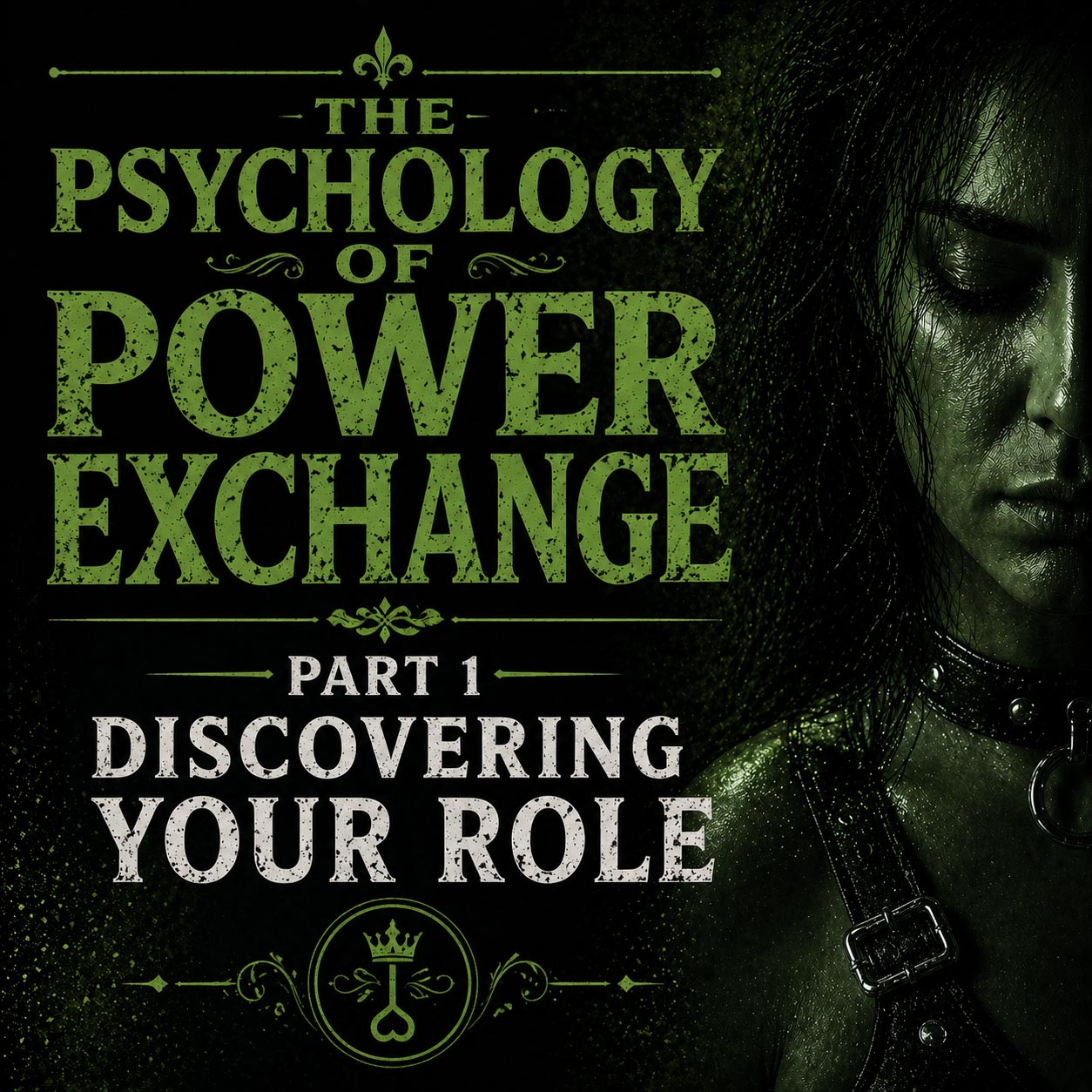
Psychology of Power Exchange Part 2: Desires vs Curiosities
Understanding this distinction can help kinksters explore responsibly while avoiding situations that may not truly align with their needs.
Call to Action
If you are exploring BDSM, take a moment to reflect.
How did you first begin thinking about your role in power exchange?
Did you identify quickly, or are you still discovering where you feel most comfortable?
Share your thoughts in the comments. Your perspective may help someone else who is navigating the same questions.
If you found this article helpful, continue following the Psychology of Power Exchange series as we explore the motivations, needs, and emotional drivers behind kink.
This series builds on the earlier Foundations of Power Exchange series, and both are part of a larger kink education system currently in development designed to help people build ethical, communicative, and sustainable D/s dynamics.