
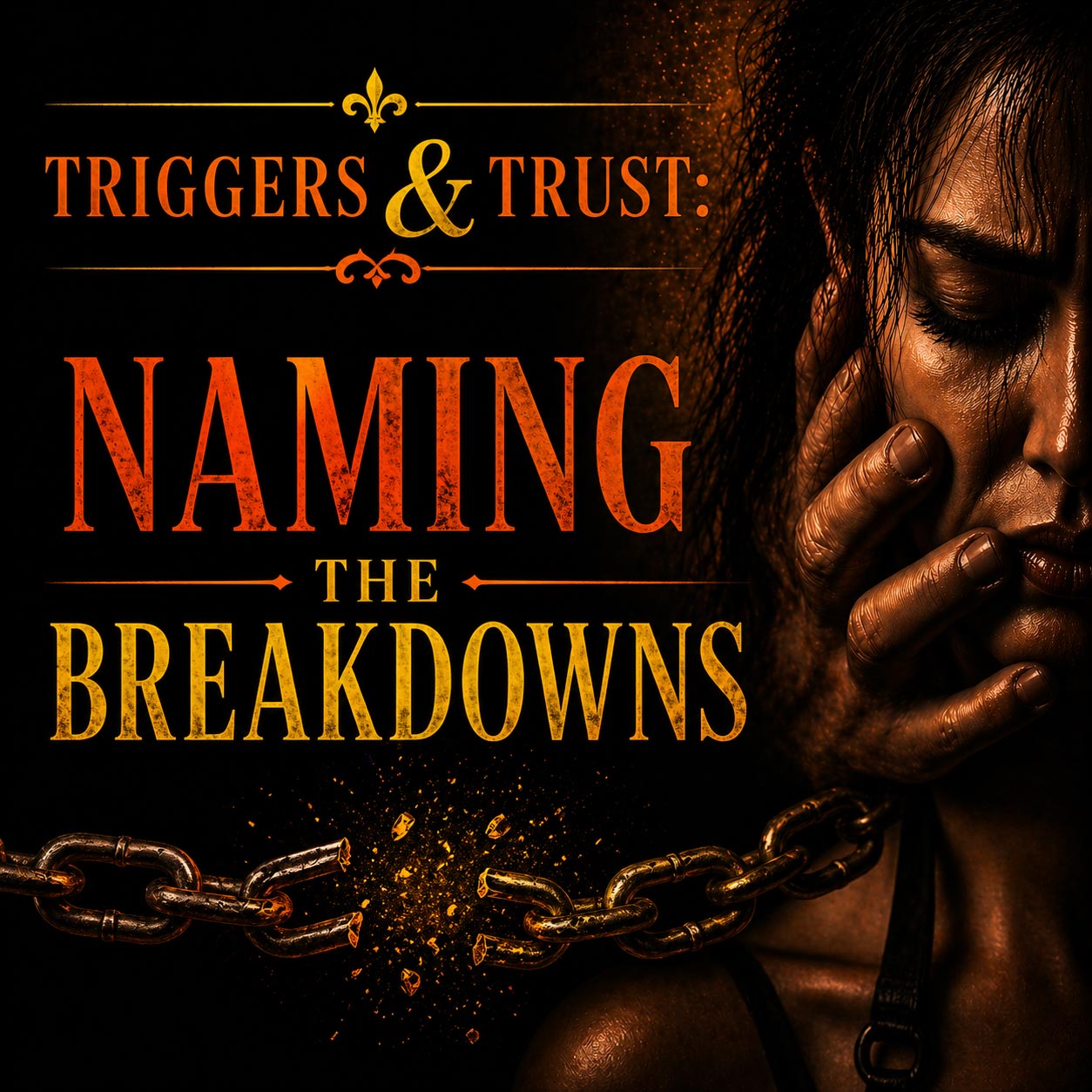
Conflict in a D/s dynamic does not always appear with raised voices or dramatic exits. Sometimes it sneaks in quietly, wearing the mask of silence. Other times it bursts forth as noise, or it shows up as pleasing, control, or distraction. These five cycles are survival strategies disguised as communication, and while they may keep a couple from total collapse in the moment, they slowly corrode trust and intimacy. Naming these patterns is the first step toward breaking them, because what remains hidden continues to rule us.
The Silence Cycle: Shutdown, Folding, and Resentment in Submission
When silence falls in the middle of a conflict, it can appear deceptively calm. A submissive might go quiet, fold into agreement, or pretend to be fine. On the surface, it may even look like obedience, but beneath the stillness resentment brews. The submissive tells themselves they are keeping the peace, but inside their needs go unmet and their boundaries blur.
A Dominant may misinterpret this silence as compliance, unaware that the submissive has shut down out of fear or exhaustion. Over time this creates a dangerous gap. What looks like surrender is actually self-betrayal, and when the mask finally cracks the resentment underneath can explode in ways that shock both partners.
Silence in submission is not true surrender. It is a nervous system response that says, “If I disappear, maybe I will not be hurt.” Real surrender requires voice, choice, and vulnerability, not folding out of fear.
The Noise Cycle: Anger, Over-Explaining, and Talking Over as Fake Dominance
On the other side of the spectrum lies the noise cycle. Here, a Dominant may raise their voice, over-explain their logic, or talk over their submissive in an attempt to regain control. To the outside eye it may look like power, but it is not grounded authority. It is armor made of volume and words.
Noise as a response is a way to drown out the discomfort inside. If I can fill the air with my explanations, maybe I will not feel small. If I can outtalk you, maybe I will not feel unseen. Yet this tactic creates the opposite of connection. The submissive may withdraw further, feeling overpowered rather than held, and the Dominant loses credibility by leading from reactivity instead of calm control.
True dominance is not about how loudly you can speak but how deeply you can listen. Authority in D/s rests on presence, not decibels. A Dominant who can stay steady in silence will always command more respect than one who needs to win by talking the longest.
The Pleasing Cycle: Caretaking, Empty Apologies, and Self-Betrayal
Many submissives fall into the pleasing cycle, though Dominants can get caught here as well. It looks like caretaking, constant apologizing, or doing whatever it takes to smooth things over. The submissive might say “I’m sorry” over and over, even when they did nothing wrong. The Dominant might soften or dismiss their own feelings to keep their partner comfortable.
Pleasing feels noble in the moment. It looks like love. But in reality it is fear wrapped in kindness. The fear is that conflict will drive the other away, so instead of standing in truth the person sacrifices themselves to maintain peace.
Over time this cycle erodes intimacy because neither partner is showing up authentically. The submissive who apologizes without meaning it builds quiet resentment. The Dominant who swallows their frustration builds distance. Both end up lonely, even while together.
In D/s, real connection cannot come from caretaking at the cost of honesty. A submissive who always pleases loses their ability to surrender with authenticity. A Dominant who hides their frustration loses the clarity that makes their authority trustworthy.
The Control Cycle: Threats, Blame, and Managing the Argument Like a Scene
The control cycle often masquerades as leadership, but it is actually panic in disguise. A partner who feels the trigger rise may attempt to seize control of the argument with threats, blame, or an attempt to manage every detail of the conversation. Statements like “If you do this again, I am done” or “This is all your fault” appear. Sometimes one or both partners begin treating the conflict like a scene, setting rules, directing tone, or dictating outcomes as though structure could erase emotion.
The truth is that conflict cannot be scripted the way a scene can. Threats and blame create fear, not safety. Managing an argument like a crisis may stabilize things for a moment, but it robs the relationship of vulnerability.
In D/s, control has its place, but only when it is rooted in consent and shared agreement. When control becomes a coping response to fear, it stops being dominance or surrender and turns into manipulation. Real intimacy requires giving up the illusion of control long enough to let truth come through.
The Distraction Cycle: Sarcasm, Numbing, and Escaping the Moment
Finally, there is the distraction cycle. Here, tension is avoided through humor, sarcasm, numbing, or escape. Instead of saying, “I feel hurt,” one partner makes a joke. Instead of staying present, they scroll through their phone, pour another drink, or disappear into busywork. It creates a quick release from the discomfort but leaves the root wound untouched.
Sarcasm may get a laugh, but it usually lands as dismissal. Numbing through food, alcohol, or scrolling may soften the edge for a moment, but when the distraction fades the problem remains.
In D/s dynamics, distraction can be particularly damaging because it signals disengagement. The submissive may feel abandoned. The Dominant may feel disrespected. Both partners lose the chance to be real with each other. Connection requires presence, even when presence is uncomfortable.
Seeing the Cycles for What They Are
Each of these cycles makes sense in the body. They are nervous system responses designed to protect us from pain. Silence, noise, pleasing, control, and distraction are strategies born of fear. Yet none of them bring us closer to what we truly crave in D/s: intimacy, surrender, trust, and authority that feels safe.
Naming these breakdowns is not about blame. It is about recognition. The submissive who shuts down is not weak, they are protecting themselves. The Dominant who raises their voice is not cruel, they are afraid of losing ground. Each cycle is simply a way of coping. And every coping strategy contains a hidden choice point where the cycle can be interrupted and turned toward connection.
The Doorway to What Comes Next
The real work of D/s relationships begins not in avoiding these cycles but in noticing them as they appear. When silence arrives, can we name it? When noise fills the room, can we pause? When pleasing shows up, can we risk honesty instead? When control grips us, can we let go? When distraction tempts us, can we stay present?
Every trigger carries with it the possibility of breakdown or breakthrough. By naming the cycles, we take the first step toward breaking them. By choosing differently, we turn arguments into doorways.
And in those doorways lies the heart of D/s intimacy: the chance to be real, to be vulnerable, to be seen, and to be held without armor.
✨ What about you? ✨
• Do you recognize yourself in any of these cycles?
• When conflict rises in your D/s dynamic, do you tend toward silence, noise, pleasing, control, or distraction?
• How do those patterns affect your ability to stay in rhythm with your partner?
• What would it look like for you to pause at the choice point instead?