When people ask me what the most important skill in BDSM is, they usually expect one of two answers.
Communication.
Or consent.
Both are essential.
But there is another skill that quietly shapes every healthy dynamic, every successful relationship, and nearly every good decision you will make.
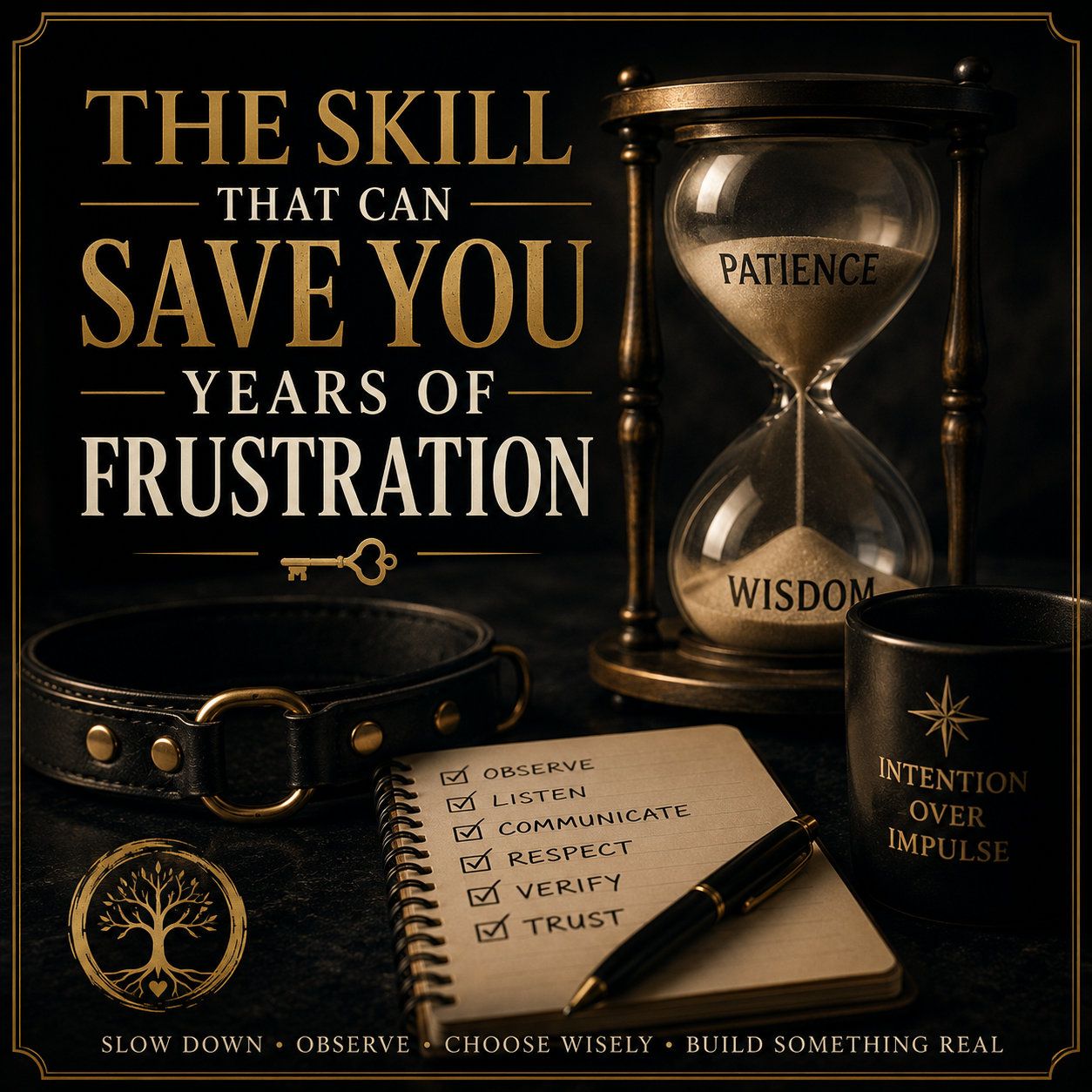
It is the ability to slow down.
That may not sound exciting.
It certainly is not as glamorous as learning rope, protocol, impact, or power exchange.
Yet I genuinely believe learning to slow down can save people years of frustration, heartbreak, and disappointment.
Not just in BDSM.
In relationships.
In life.
Most People Rush the Wrong Things
New Dominants often rush authority.
New submissives often rush trust.
Couples often rush commitment.
Everyone rushes chemistry.
We meet someone who seems to understand us.
The conversations are effortless.
The attraction is undeniable.
The fantasies align.
Suddenly we begin imagining the future before we’ve truly learned about the person standing in front of us.
Chemistry creates excitement.
Time reveals character.
Those are not the same thing.
Attraction Is Immediate. Trust Is Earned.
One of the biggest mistakes people make is treating attraction and trust as if they develop at the same speed.
They do not.
You can feel attracted within minutes.
You can feel emotionally connected within days.
You can feel deeply understood within weeks.
Trust, however, is built through repeated experiences over time.
It grows when someone consistently behaves in ways that make you feel emotionally and physically safe.
It grows when words and actions continue to align.
It grows when someone handles disappointment with maturity instead of manipulation.
Trust is not built through promises.
It is built through patterns.
Learn to Observe Before You Invest
Healthy relationships are built on observation.
Not assumption.
Watch how someone treats people who cannot offer them anything.
Watch how they respond to boundaries.
Watch how they handle conflict.
Watch what happens when they hear the word “no.”
Watch whether they apologize when they make mistakes.
Watch whether they consistently follow through.
These moments tell you far more than chemistry ever will.
Anyone can impress someone during the first few conversations.
Character reveals itself over time.
Vetting Is a Skill, Not a Checklist
Many people think vetting is simply asking the right questions.
Questions matter.
But listening matters even more.
So does observing.
Good vetting involves paying attention to patterns rather than isolated moments.
Does this person’s behavior remain consistent?
Do they become defensive when challenged?
Do they respect your pace?
Do they make you feel safe enough to communicate honestly?
Compatibility is rarely discovered through a single conversation.
It is revealed through repeated interactions.
Healthy Relationships Move at the Speed of Trust
One of the healthiest perspectives you can adopt is this:
Move at the speed of trust.
Not attraction.
Not loneliness.
Not excitement.
Trust.
Some relationships naturally develop quickly.
Others require more time.
Neither approach is inherently better.
The important part is allowing trust to determine the pace instead of emotional intensity.
The right person rarely resents healthy pacing.
In fact, they often appreciate it.
Because they are looking for something sustainable too.
Boundaries Become Easier
When you stop rushing relationships, boundaries become much easier to maintain.
You no longer feel pressured to ignore discomfort.
You no longer convince yourself that obvious warning signs will disappear.
You no longer explain away inconsistent behavior simply because the chemistry feels strong.
Slowing down gives your intuition time to speak.
And intuition often whispers long before experience starts shouting.
The Difference Between Urgency and Intention
Unhealthy dynamics often feel urgent.
Healthy dynamics often feel intentional.
Urgency says:
“We have to decide now.”
“We have to meet tonight.”
“You should already trust me.”
“If you really wanted this, you wouldn’t hesitate.”
Intention sounds different.
“Take your time.”
“I want you to feel comfortable.”
“We’ll get there when we’re both ready.”
“I’d rather build something strong than something fast.”
The difference may seem subtle.
Its impact is enormous.
Why This Saves Years of Frustration
Many people do not regret moving too slowly.
They regret moving too quickly.
Ignoring red flags.
Overlooking incompatibilities.
Giving trust before it had been earned.
Investing emotionally before understanding someone’s character.
Every time you slow down long enough to observe, ask questions, communicate honestly, and evaluate consistency, you reduce the likelihood of repeating painful patterns.
That is not fear.
That is wisdom.
Final Thoughts
The most valuable skill you can develop is not learning a new technique.
It is learning patience.
Patience gives trust time to grow.
Patience gives character time to reveal itself.
Patience gives communication time to deepen.
Patience gives relationships the opportunity to become something real rather than simply exciting.
Healthy BDSM is rarely built through urgency.
It is built through intentional decisions made over time.
If you can learn to slow down, observe carefully, communicate honestly, and move at the speed of trust, you will avoid many of the mistakes that leave people frustrated, discouraged, and questioning whether healthy dynamics even exist.
They do.
They simply take longer to build than fantasies often suggest.
Continue Building Your Foundation
If this article resonated with you, these resources will help you develop the skills that create healthier, longer-lasting dynamics:
- Before the Collar Comes the Conversation – Why communication always comes before commitment.
- A Boundary Is Not a Threat – How boundaries protect trust and emotional safety.
- Why Healthy Structure Creates More Freedom, Not Less – Discover how intentional structure reduces anxiety and strengthens connection.
- What Respect Actually Feels Like Inside a Healthy D/s Dynamic – Learn why respect is earned through consistent behavior, not demanded through authority.
Strong relationships are rarely built by people who rush.
They are built by people who learn to recognize character before they surrender trust.
Ready for the Next Step?
Whether you’re just beginning your journey or looking to strengthen an existing dynamic, these resources can help you build healthier, safer, and more intentional power exchange relationships.
New Here?
Download the Free Orion Starter Toolkit
Includes the Dynamic Health Assessment, Vetting Compatibility Assessment, Weekly Dynamic Review, and Ritual Builder Worksheet.
👉 https://orionsquill.com/orion-starter-toolkit/
Want Better Vetting Skills?
The Vetting Book
Learn how to identify green flags, recognize red flags, ask better questions, and make more informed relationship decisions.
👉 https://orionsquill.com/vetting/
Need More Structure?
The Structure Blueprint
Practical guidance on creating rules, rituals, protocols, expectations, and communication systems that support lasting dynamics.
👉 https://orionsquill.com/products/
Want Personal Guidance?
One-on-One Coaching & Mentoring
Get personalized support with vetting, communication, boundaries, relationship dynamics, structure development, and personal growth.
👉 https://orionsquill.com/coaching/
#BDSM
#DSDynamic
#PowerExchange
#Vetting
#Trust
#Communication
#Consent
#HealthyRelationships
#HealthyDynamics
#RelationshipPsychology
#Boundaries
#EmotionalSafety
#Dominance
#Submission
#BeforeTheCollar
#Attachment
#Leadership
#IntentionalRelationships
#KinkEducation
#RelationshipGrowth
#SexyWordsmith