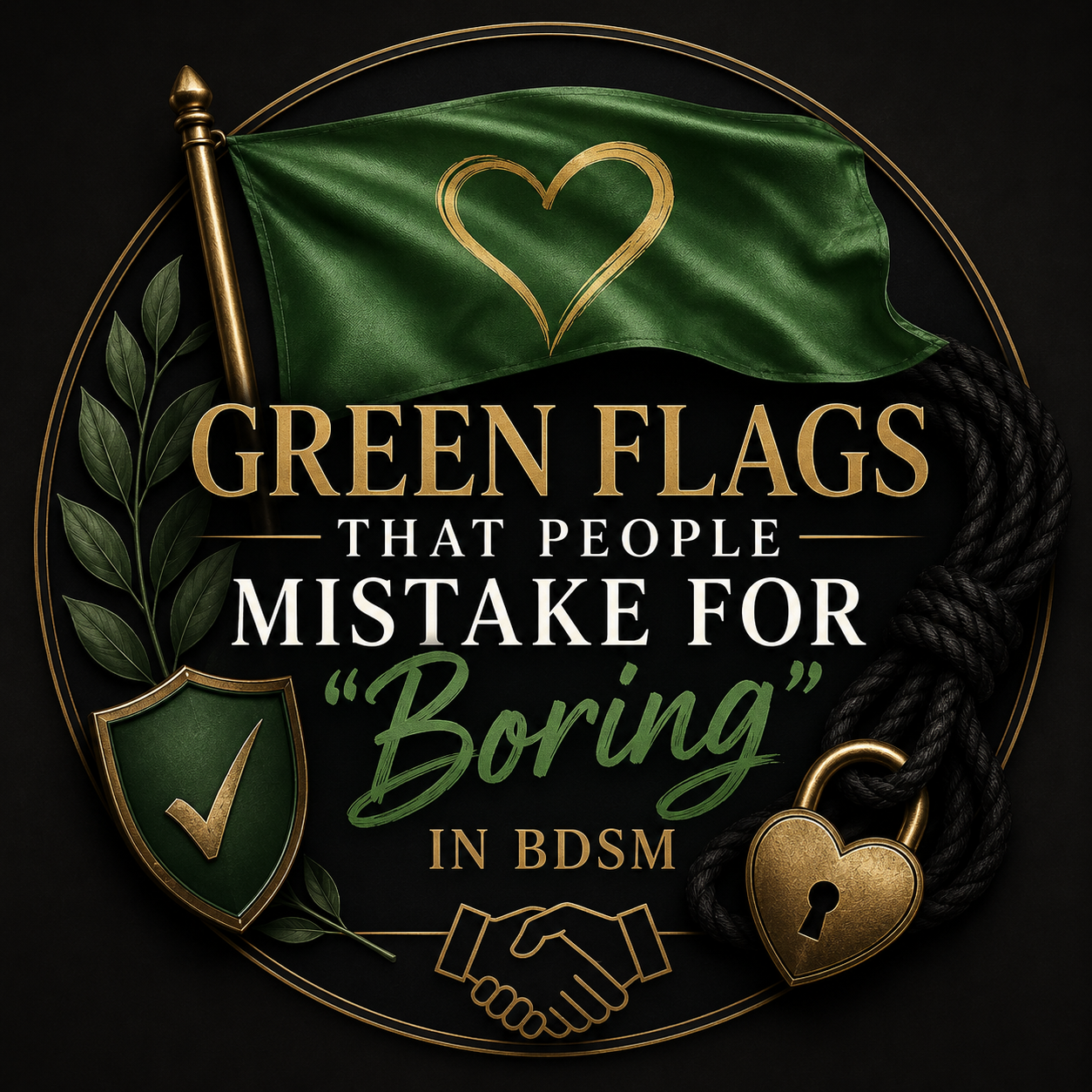
One of the strangest things that happens when people begin healing their relationship patterns is this:
Healthy dynamics can initially feel less exciting.
Not because they lack chemistry.
Not because they lack Dominance.
Not because they lack passion.
But because chaos is no longer driving the connection.
For many people, especially those who have experienced emotionally inconsistent relationships, unpredictability starts feeling like attraction.
The emotional highs feel intoxicating.
The uncertainty feels addictive.
The constant craving for reassurance feels like devotion.
So when they finally encounter someone emotionally grounded inside BDSM, they sometimes mistake stability for lack of intensity.
And that misunderstanding causes people to walk away from some of the healthiest dynamics they may ever encounter.
The BDSM Community Often Romanticizes Emotional Chaos
A lot of unhealthy behaviors get framed as “deep D/s.”
Extreme jealousy becomes:
“They are just possessive.”
Emotional unpredictability becomes:
“They keep me on edge in a good way.”
Lack of communication becomes:
“They are mysterious.”
Boundary pushing becomes:
“They are helping me grow.”
But healthy power exchange is not built on emotional instability.
It is built on:
- Trust
- Clarity
- Consistency
- Communication
- Repair
- Emotional safety
And unfortunately, those things can initially feel “boring” to people whose nervous systems became accustomed to chaos.
What Real Green Flags Actually Look Like
Healthy BDSM rarely looks as cinematic as people expect.
Often, it looks calm.
Not lifeless.
Not passionless.
Regulated.
A healthy Dominant may:
- Ask thoughtful questions during vetting
- Encourage open communication
- Respect hard limits immediately
- Care about your emotional state outside scenes
- Remain calm during conflict
- Explain protocols clearly
- Admit mistakes when necessary
- Prioritize consistency over emotional games
And because they are emotionally stable, they may initially feel less “electrifying” than someone who constantly creates emotional highs and lows.
But emotional whiplash is not chemistry.
It is dysregulation.
Green Flags in Dominants That People Overlook
They Respect “No” Immediately
A healthy Dominant does not turn your boundaries into a negotiation contest.
They do not guilt you.
Pressure you.
Punish hesitation.
Or frame discomfort as failure.
They understand that trust deepens when consent is respected quickly and cleanly.
Ironically, many submissives feel safer surrendering deeper to people who fully respect their ability to refuse.
They Care About Your Life Outside the Dynamic
Healthy Dominants do not need to consume your entire identity to feel powerful.
They encourage:
- Friendships
- Goals
- Therapy
- Rest
- Independence
- Emotional support systems
- Self development
Because healthy authority is not threatened by your individuality.
It values it.
They Stay Consistent
One of the biggest green flags in BDSM is predictability.
Not boredom.
Predictability.
You know:
- How they communicate
- How they handle conflict
- How they respond to boundaries
- How they correct behavior
- How they show care
Their personality does not radically change based on mood swings, insecurity, or emotional manipulation tactics.
Consistency creates safety.
And safety creates trust.
Green Flags in Submissives That Deserve More Respect
Healthy dynamics are not only built by ethical Dominants.
Submissives contribute to emotional safety too.
A healthy submissive:
- Communicates honestly
- Admits uncertainty
- Maintains self awareness
- Respects consent both ways
- Takes accountability
- Avoids manipulative testing behaviors
- Understands that Dominants are human too
Submission should not mean emotional dependency disguised as devotion.
Healthy submission still includes emotional responsibility.
And that matters far more than performative obedience.
Why Healthy Dynamics Can Feel “Less Intense” At First
This is the part many people struggle with most.
If someone grew up around inconsistency, emotional volatility, or unstable attachment, their nervous system may associate anxiety with attraction.
The chase feels exciting.
The uncertainty feels consuming.
The inconsistency creates obsession.
Inside BDSM, this can become even stronger because power exchange naturally intensifies emotional experiences.
So when someone finally encounters a calm, communicative, emotionally stable dynamic, their brain may initially interpret it as:
- Too safe
- Too predictable
- Too easy
- “Missing something”
But what is often “missing” is survival mode.
Many people are not addicted to passion.
They are addicted to uncertainty.
And healthy BDSM can feel unfamiliar simply because your nervous system is no longer preparing for emotional danger.
Neurodivergence and Emotional Pattern Recognition
This conversation becomes even more important when discussing neurodivergence.
Many neurodivergent people spend years feeling misunderstood, emotionally overstimulated, rejected, or disconnected from traditional relationship expectations.
That can create a powerful attraction toward BDSM because:
- Roles feel clearer
- Communication can become more direct
- Structure feels grounding
- Rituals feel regulating
- Rules create predictability
- Intensity creates focus
- Praise and reassurance can feel deeply impactful
But neurodivergent people may also be more vulnerable to confusing emotional intensity with emotional safety.
Especially when:
- Hyperfixation becomes attachment
- Rejection sensitivity amplifies conflict
- Emotional inconsistency creates obsessive focus
- Validation feels rare and deeply consuming
- Pattern recognition notices small changes constantly
This is why emotionally healthy BDSM matters so much.
A healthy dynamic should regulate the nervous system more than destabilize it.
It should create clarity more than confusion.
And neurodivergent kinksters deserve relationships where they are not constantly forced to decipher whether they are safe, valued, or emotionally secure.
Healthy BDSM Is Often Less Performative
One thing many experienced kinksters eventually realize is this:
The healthiest dynamics often look quieter from the outside.
Less posturing.
Less constant proving.
Less dramatic ownership displays.
Less emotional chaos mistaken for passion.
Instead, you often see:
- Calm communication
- Quiet consistency
- Stable affection
- Thoughtful protocols
- Mutual respect
- Honest repair after mistakes
- Sustainable connection
Not because the dynamic lacks intensity.
But because it no longer requires instability to feel real.
Final Thoughts
The BDSM community spends a lot of time discussing red flags.
But not enough time discussing what healthy dynamics actually feel like emotionally.
Because many people have never experienced:
- Calm care
- Stable Dominance
- Safe surrender
- Predictable affection
- Conflict without emotional destruction
- Intimacy without fear
And until they do, healthy relationships can accidentally feel “boring” compared to emotional chaos.
But peace is not boredom.
Safety is not weakness.
Consistency is not lack of passion.
In many cases, it is the first real foundation intimacy has ever had.
Call to Action
I think this is one of the most important conversations people in BDSM can have.
Especially for those trying to unlearn the idea that emotional suffering equals depth.
Ask yourself honestly:
- What behaviors have I mistaken for passion?
- Do I feel calmer or more anxious inside my dynamic?
- Can I communicate honestly without fear?
- Have I confused unpredictability with chemistry?
- What green flags did I overlook because they felt unfamiliar?
- Does my nervous system feel regulated or constantly activated around this person?
And maybe the hardest question of all:
If emotional chaos disappeared completely, would the connection still feel meaningful to you?
I genuinely want to hear people’s perspectives on this.
What green flags do you value most now that you may not have appreciated earlier?
What healthy behaviors once felt “boring” until you experienced the difference?
What helped you learn the difference between intensity and emotional safety?
Ready for the Next Step?
Whether you’re just beginning your journey or looking to strengthen an existing dynamic, these resources can help you build healthier, safer, and more intentional power exchange relationships.
New Here?
Download the Free Orion Starter Toolkit
Includes the Dynamic Health Assessment, Vetting Compatibility Assessment, Weekly Dynamic Review, and Ritual Builder Worksheet.
👉 https://orionsquill.com/orion-starter-toolkit/
Want Better Vetting Skills?
The Vetting Book
Learn how to identify green flags, recognize red flags, ask better questions, and make more informed relationship decisions.
👉 https://orionsquill.com/vetting/
Need More Structure?
The Structure Blueprint
Practical guidance on creating rules, rituals, protocols, expectations, and communication systems that support lasting dynamics.
👉 https://orionsquill.com/products/
Want Personal Guidance?
One-on-One Coaching & Mentoring
Get personalized support with vetting, communication, boundaries, relationship dynamics, structure development, and personal growth.
👉 https://orionsquill.com/coaching/
#SexyWordsmith
#DSDynamic
#PowerExchange
#GreenFlags
#HealthyDynamics
#KinkEducation
#ConsentMatters
#EmotionalSafety
#DominanceAndSubmission
#Submission
#Dominance
#AttachmentDynamics
#RelationshipAwareness
#TrustAndConsent
#Aftercare
#SafeSaneConsensual
#KinkEducation
#IntentionalRelationships