One of the biggest misconceptions in BDSM is the belief that consistency means doing the same thing forever. The same rituals. The same protocols. The same routines. The same expectations. The same structure.
But real life does not work that way. People change. Schedules change. Careers change. Health changes. Relationships change. Life changes. And the dynamics that survive long term are rarely the ones that resist those changes. They are the ones that learn how to adapt to them. A lot of people enter D/s believing the challenge is creating structure.
In reality, the bigger challenge is maintaining connection when the original structure no longer fits.
Because it is easy to feel connected when everything is going well. When energy is high. When communication is effortless. When schedules align. When stress is low. When both people have the emotional bandwidth to show up exactly how they want to.
The real test comes when life becomes complicated. When someone gets sick. When work becomes overwhelming. When family responsibilities increase. When mental health struggles appear. When neurodivergent challenges become more difficult to manage. When burnout enters the picture. When one partner has less capacity than they normally do.
Those moments reveal whether a dynamic was built on rigid expectations or intentional connection. Because healthy power exchange is not measured by how perfectly someone follows protocols during ideal circumstances.
It is measured by how both people navigate imperfect circumstances together. This is where many dynamics begin to struggle. Not because anyone stopped caring. But because both people become attached to what the dynamic used to look like.
The morning ritual that once felt grounding now feels overwhelming. The communication expectation that once felt easy now feels exhausting. The structure that once created connection now creates pressure. And instead of adjusting, people often try harder to force the old version to continue working. That rarely succeeds.
Because healthy structure should support the people inside the dynamic. The people should not have to sacrifice themselves to preserve the structure. That distinction matters. Especially in long term relationships. Because sustainable D/s is not about maintaining perfect protocols.
It is about maintaining intentional connection. Sometimes adaptation means reducing expectations temporarily. Sometimes it means creating new rituals. Sometimes it means simplifying communication. Sometimes it means recognizing that emotional support is more important than protocol compliance. Sometimes it means understanding that rest is not failure. It is maintenance.
One of the strongest signs of a healthy dynamic is the ability to ask:
“What do we need right now?”
Instead of:
“Why can’t we keep doing what worked six months ago?”
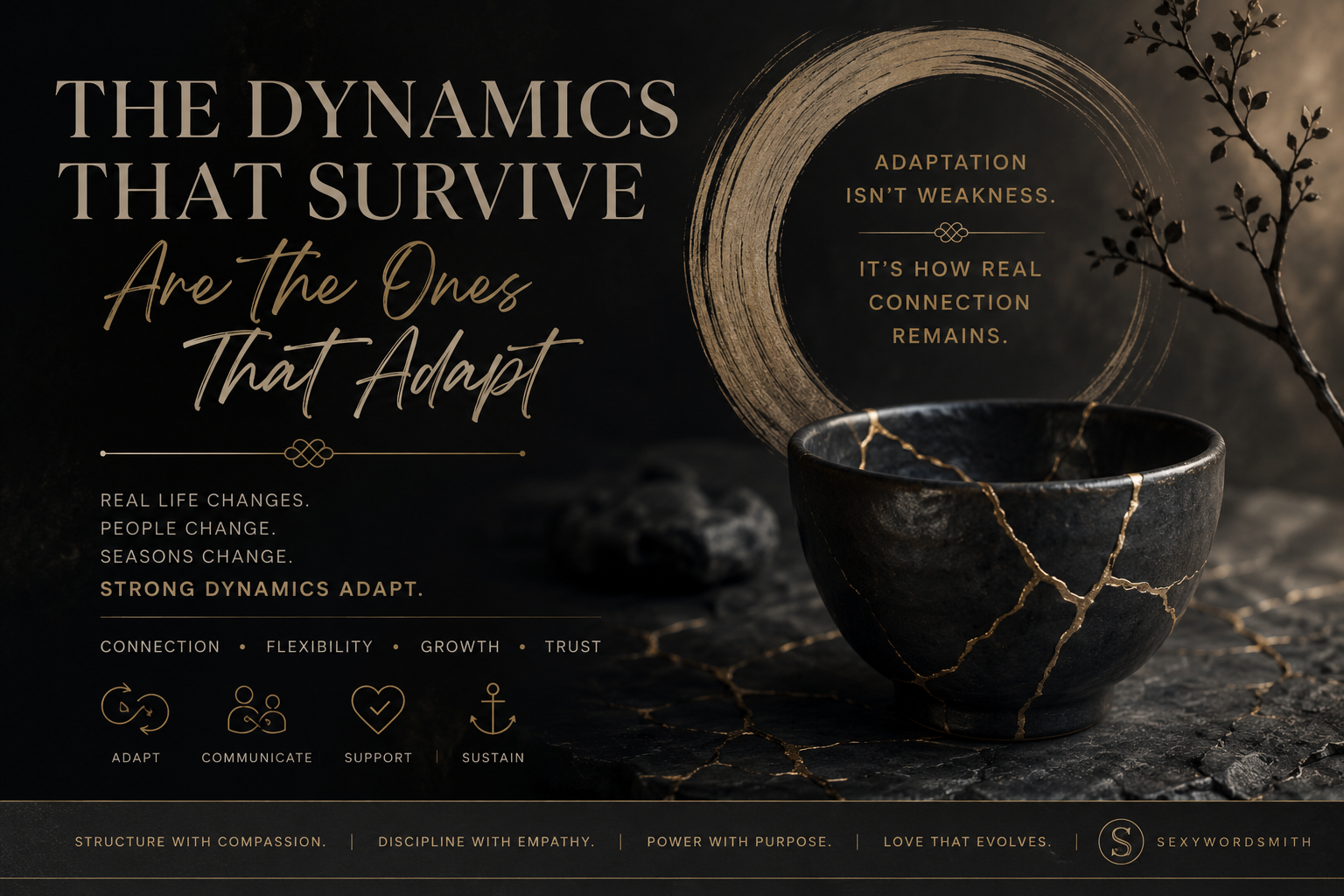
That shift changes everything. Because adaptation is not weakness. Adaptation is responsiveness. And responsiveness is one of the most underrated relationship skills in BDSM.
Especially for Dominants. Leadership is not just creating structure. Leadership is recognizing when structure needs to evolve. Not every challenge should be met with more rules. Not every problem requires stricter protocols.
Sometimes what is needed is curiosity, compassion, flexibility, communication and enough emotional intelligence to recognize when a person is struggling instead of assuming they are failing. The same applies to submission. Healthy submission is not measured by how much pressure someone can endure before breaking.
It is measured by the ability to communicate honestly about capacity, needs, struggles, and limitations. Because the goal of a dynamic should never be preserving appearances. The goal should be preserving connection. The healthiest long term dynamics understand this.
They know there will be seasons of intensity. And seasons of rest. Seasons of growth. And seasons of recovery. Seasons where structure expands. And seasons where it simplifies.
They stop viewing adaptation as a threat to the dynamic. And start recognizing it as one of the reasons the dynamic survives. Because real life will always change.
The question is whether the relationship can change with it. And in my experience, the dynamics that last are rarely the ones that refuse to adapt. They are the ones that understand adaptation is not the opposite of consistency. It is often what makes consistency possible.
Call To Action/Exploration Questions
• How has your dynamic changed over the last year?
• Are there structures that no longer serve the people inside the relationship?
• When challenges arise, do you become more rigid or more curious?
• Does your dynamic make room for changing needs and circumstances?
• Are you protecting the connection or protecting the appearance of the connection?
• What adaptations could strengthen your dynamic right now?
• How do you distinguish between healthy consistency and unhealthy rigidity?
I am a BDSM educator, writer, and coach focused on sustainable power exchange, emotional intelligence inside kink, attachment dynamics, nervous system awareness, communication, structure, protocol development, and long term D/s that functions both inside and outside of scenes. My work centers on helping people build healthier, more intentional, emotionally sustainable dynamics rooted in trust, clarity, accountability, and genuine connection.
#SexyWordsmith
#BDSM
#Dominance
#Submission
#PowerExchange
#DSDynamic
#KinkEducation
#HealthyDynamics
#LongTermDynamics
#Protocols
#Communication
#AttachmentTheory
#Neurodivergent
#ADHD
#EmotionalIntelligence
#RelationshipPsychology
#EmotionalSafety
#Leadership
#Structure
#IntentionalRelationships