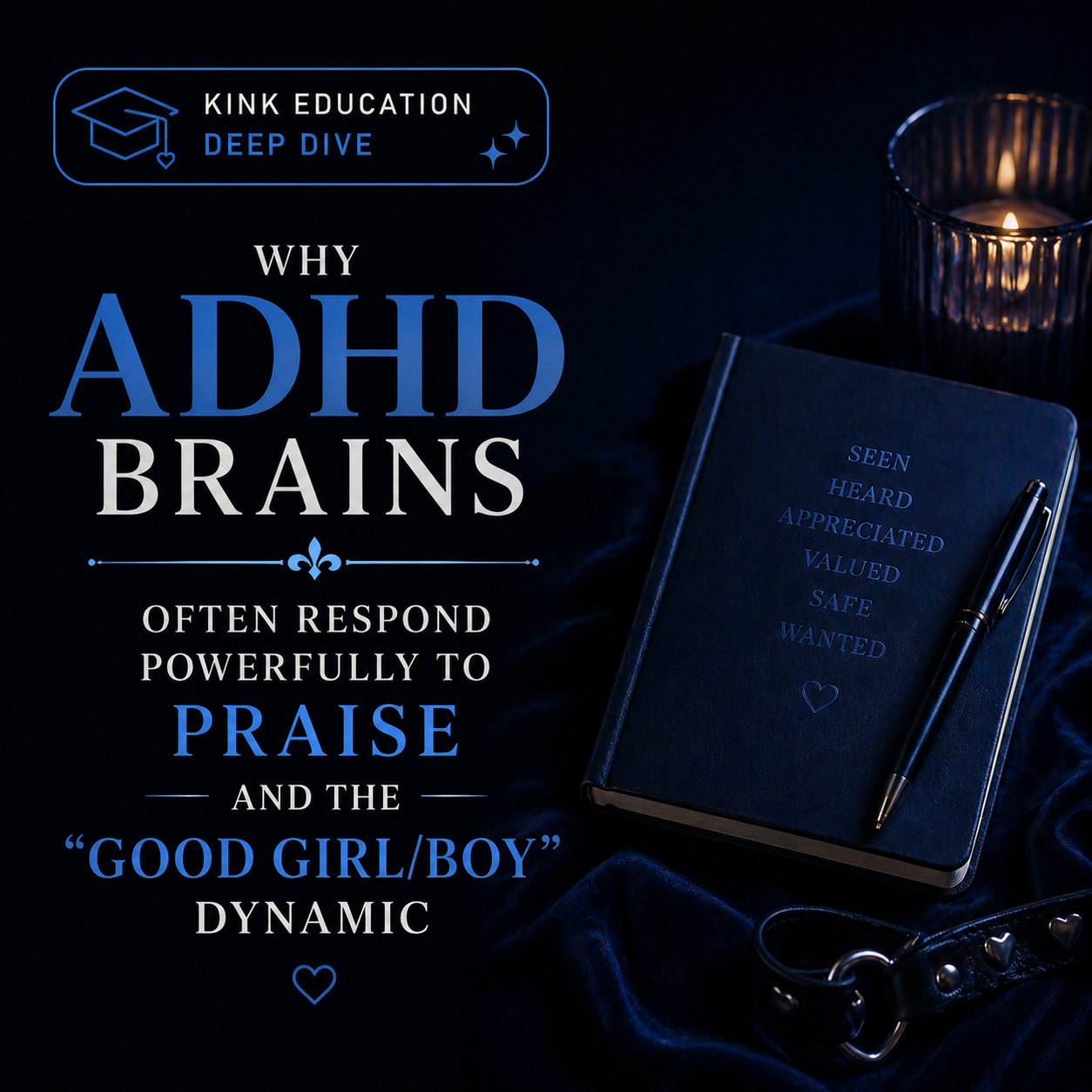
Most people think praise in kink is just a kink.
It isn’t.
For many people, especially those with ADHD, praise is not just arousing. It is regulating. Grounding. Sometimes even necessary.
That simple phrase
“good girl/boy”
can land deeper than most people realize.
Within kink spaces, many people notice patterns between neurodivergence and certain dynamics. One that appears surprisingly often is the connection between ADHD and praise based dynamics such as the “good girl/boy” kink. While this dynamic can exist for anyone regardless of neurology, there are several psychological mechanisms that help explain why people with ADHD may experience praise and approval as especially powerful and meaningful.
Understanding this connection can help partners build healthier dynamics, communicate more effectively, and create environments where both dominance and submission support emotional wellbeing rather than exploitation.
If this resonates with you…
I created a deeper guide on the psychology, communication, and structure behind powerful D/s dynamics.
Join my private list here to get it and receive future deep dives and early access to the full education system as it’s built:
[Join Here]
The ADHD Brain Is Wired for Dopamine
ADHD is fundamentally linked to differences in dopamine regulation in the brain. Dopamine is the neurotransmitter connected to motivation, reward, focus, and anticipation.
For many people with ADHD, baseline dopamine levels are lower or less stable. This means the brain is constantly searching for stimulation that provides a rewarding dopamine response.
Praise can act as an extremely effective dopamine trigger.
When someone hears a phrase like:
“Good girl/boy.”
“Well done.”
“I’m proud of you.”
The brain receives a social reward signal. For someone with ADHD, that reward can feel especially strong because it provides something their brain is actively seeking: clear feedback and emotional reinforcement.
Within a D/s dynamic, this can amplify the emotional power of praise.
Clear Feedback Reduces ADHD Uncertainty
People with ADHD often struggle with ambiguity. Executive function differences can make it harder to judge whether they are doing something correctly or meeting expectations.
Praise provides immediate clarity.
Instead of wondering:
“Am I doing this right?”
“Is my partner happy?”
“Did I mess something up?”
Praise gives direct confirmation.
“You did exactly what I asked.”
“That was perfect.”
“You’re such a good girl/boy.”
This clarity can feel grounding and stabilizing. It removes the anxiety of guessing and replaces it with certainty.
In psychological terms, this is positive reinforcement combined with clear behavioral feedback.
Rejection Sensitivity Dysphoria (RSD)
Many people with ADHD experience something called Rejection Sensitivity Dysphoria, an intense emotional reaction to perceived criticism or disapproval.
Because negative feedback can feel overwhelming, positive feedback becomes even more powerful.
Praise can function as emotional reassurance. It communicates safety, acceptance, and appreciation.
Within consensual power exchange dynamics, hearing praise from a trusted Dominant can counterbalance fears of failure or rejection.
Instead of:
“I disappointed them.”
The message becomes:
“They see me. They value me. I’m doing well.”
This emotional validation can create a powerful sense of security inside the dynamic.
Structure Helps ADHD Thrive
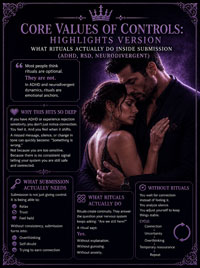
Healthy D/s dynamics often introduce structure, rituals, expectations, and routines.
These elements can be extremely helpful for ADHD brains.
Examples include:
• Daily check ins
• Clear instructions
• Rituals like kneeling, greetings, or tasks
• Defined roles and responsibilities
When praise is incorporated into these structures, it reinforces behaviors in a way that ADHD brains respond well to.
For example:
“Thank you for completing your tasks today. Good girl/boy.”
This creates a feedback loop of action followed by reward, which strengthens motivation and engagement.
Attention and Presence
Another important factor is focused attention.
People with ADHD often feel invisible or misunderstood in everyday life. Being fully seen and acknowledged can carry deep emotional weight.
Praise directed specifically at them creates a moment of intense focus and connection.
A Dominant saying:
“Look at me. You did exactly what I wanted.”
Is not just praise. It is attention, presence, and recognition.
For someone who has spent years feeling scattered or overlooked, that moment can feel deeply affirming.
Important Ethical Considerations
Because praise can affect ADHD brains strongly, ethical responsibility becomes even more important in kink dynamics.
Dominants should be aware that praise is not just erotic language. It can become a powerful emotional reinforcement tool.
Healthy dynamics should include:
• Clear consent and negotiation
• Open communication about emotional needs
• Awareness of neurodivergence
• Encouragement of autonomy outside the dynamic
Praise should support growth, confidence, and wellbeing rather than creating dependency or manipulation.
When used responsibly, it becomes a tool for empowerment rather than control.
Final Thoughts
The connection between ADHD and praise based kink dynamics is not accidental. It emerges from a combination of dopamine seeking, desire for clear feedback, sensitivity to rejection, and the powerful impact of focused attention.
For many neurodivergent individuals, praise can feel like emotional oxygen.
Inside a healthy D/s relationship, that reinforcement can become part of a dynamic that nurtures confidence, structure, and connection.
Understanding the psychology behind these dynamics helps everyone involved build relationships that are not only exciting but also emotionally intelligent and sustainable.
Take This Further
If this resonated with you, I go deeper into communication, psychology, and ethical power exchange in my private content and upcoming structured education system.
Join here for deeper guides, early access, and exclusive material:
[Join Here]
You can also explore more of my writing here:
[Website Link]
#SexyWordsmith
#BDSMCommunity
#NeurodivergentKink
#PraiseKink
#DSDynamics
#PowerExchange
#ConsentCulture
#EthicalDominance